
How to Clean Wood Furniture in 5 Simple Steps
Wood remembers everything. The mug you forgot a coaster for, the polish you got a little too enthusiastic with, and the toddler who decided your wooden dining table doubled as an art studio.
Cleaning it isn't hard, but doing it wrong is shockingly easy, and the damage usually shows up days later when it's too late to undo.
This guide covers how to clean wooden furniture the right way, what to avoid, and how to handle the stains, stickiness, and scratches that come with actually living with your furniture.
Before you clean, know what you're dealing with
Not all wood furniture wants the same treatment, and this is where most damage actually starts. Skip this step and you might be scrubbing a delicate oiled finish like it's a kitchen counter.
Sealed or varnished wood
If your piece has a glossy or satin sheen and feels smooth and slightly plastic-like under your palm, it's sealed. This finish acts like a raincoat for the wood underneath, so a lightly damp cloth is perfectly safe.
Just don't let water pool anywhere, especially along seams or edges where it can creep beneath the seal.
Oiled or unsealed wood
Run your hand across it, and if it feels more like touching raw timber than touching plastic, you're dealing with oiled or unsealed wood. This type absorbs moisture the way a sponge absorbs coffee, so keep contact with water to an absolute minimum and consider it on a re-oiling schedule every few months to keep it from drying out and cracking.
If you genuinely can't tell which finish you have, treat it as oiled. It's the safer assumption, and erring on the cautious side costs you nothing but a slightly longer clean.
The Sierra Outdoor Dining Table Set
Picture credits: @shortstache
The Sierra Outdoor Dining Table Set
Picture credits: @shortstache
The Harper 6-Drawer Dresser
Picture credits: @saratoufali
The Harper 6-Drawer Dresser
Picture credits: @saratoufali
The five-step wood furniture cleaning routine
Step one: Dust before you wet anything
Dry particles turn into tiny scratches the moment you add moisture and pressure, so a soft microfiber pass, always following the direction of the grain, comes first.
Step two: Mix your solution properly
A few drops of mild dish soap in a bowl of warm water is enough. Skip anything harsh, and skip using too much soap, since residue left behind is exactly what causes that sticky film people complain about later.
Step three: Understand what "damp" actually means
Dip your cloth, then wring it until it stops dripping and only leaves a faint trace of moisture on your hand. That's the level you want. Genuinely wet is never the goal here.
Step four: Wipe with the grain, not against it
Cleaning against the grain can push moisture and grime into the wood's natural lines rather than lifting it off.
Step five: Dry immediately, without exception
Take a separate dry cloth and go over the entire surface right after cleaning. Wood left damp for even twenty minutes can start to swell, warp, or cloud, and that's the kind of damage no amount of polish fixes afterward.
The Seb Small Bookshelf
Picture credits: @ryoko_market
The Seb Small Bookshelf
Picture credits: @ryoko_market

The Casa Extendable Dining Table
Picture credits: @camillas_edit
The Casa Extendable Dining Table
Picture credits: @camillas_edit
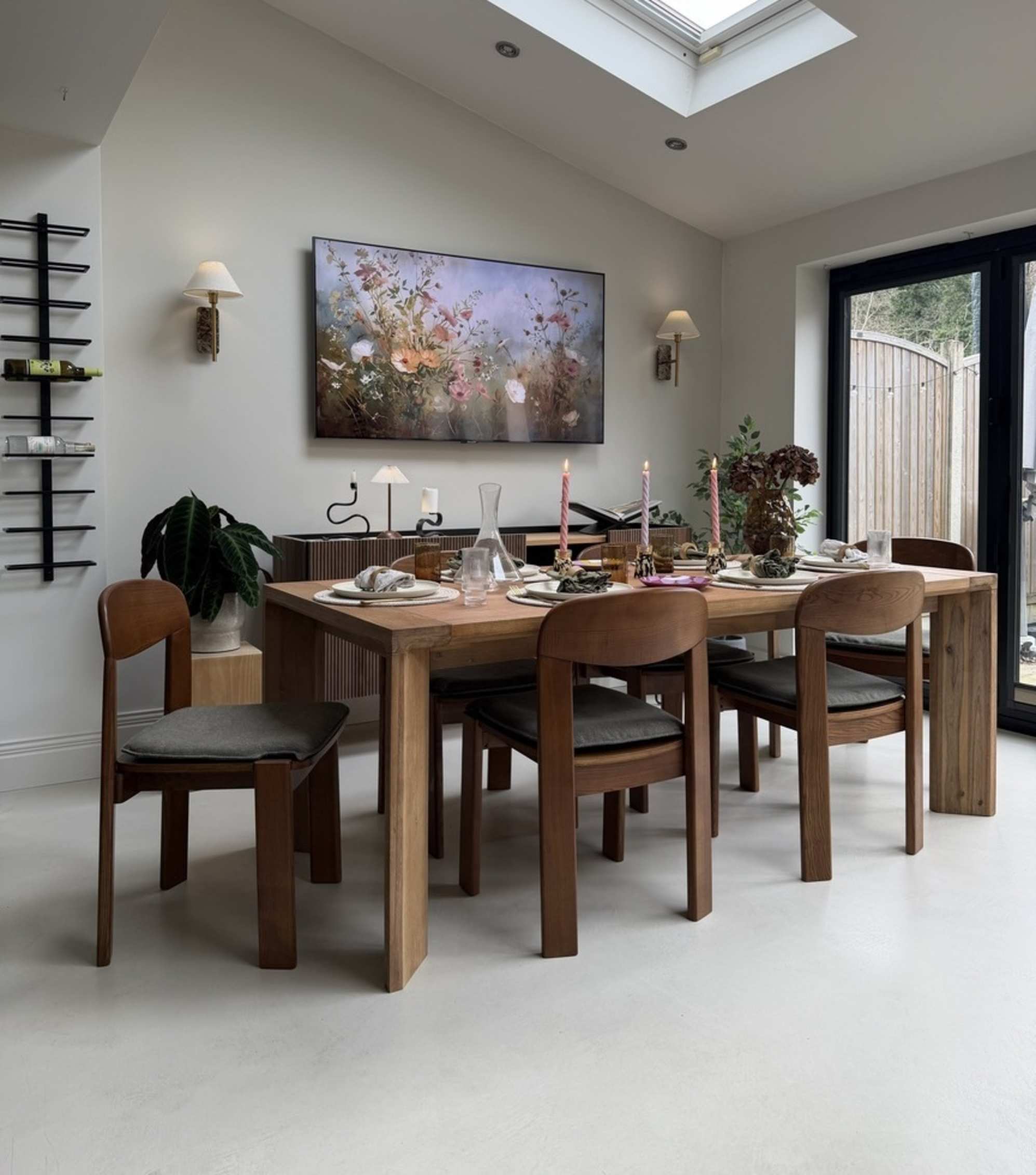
What to clean wooden furniture with, and what to leave alone
The reliable everyday pick: Mild soap and water
For nearly every situation, this combination does the job without introducing risk. It lifts dust, light grease, and everyday grime, and it won't strip or discolor a finish the way stronger products can.
Vinegar solution: Helpful sometimes, risky other times
A diluted vinegar and water mix can cut through grease that soap alone struggles with, particularly on kitchen furniture. But vinegar is mildly acidic, and repeated use on certain finishes can dull the sheen over time, so treat it as an occasional tool rather than a daily habit.
Commercial wood cleaners: What to look for
If you're reaching for a bottle, look for one labeled specifically for your finish type, whether that's oiled, waxed, or sealed. Products marketed as all-purpose furniture polish often contain silicone or heavy oils that build up in layers, and that buildup is precisely what leads to the tacky feeling people mistake for dirt.
What not to use
Avoid anything abrasive, anything ammonia-based, and anything that isn't specifically formulated for wood. A quick reference:
| Skip this | Why it's a problem |
|---|---|
| Furniture polish sprays, used often | Builds up into a sticky film over time |
| Scouring pads or abrasive sponges | Scratches the finish, sometimes permanently |
| Excess water or soaking cloths | Causes swelling, warping, and clouding |
| Ammonia-based glass cleaners | Can strip or haze certain finishes |
When your wood furniture feels sticky (no matter how much you clean it)
This is one of the most common complaints, and ironically it's usually caused by cleaning too much rather than too little. Layer after layer of polish or spray builds up like sediment, and eventually your table feels tacky even right after wiping it down.
Start gentle. Wipe with your usual soap and water mix, then wipe again with a fresh cloth to lift whatever the first pass loosened. If the grabby feeling persists after two rounds, move to a proper finish-safe cleaner designed to cut through buildup, and keep wiping and drying until the surface finally feels smooth again rather than clingy.
Fixing stains without making them worse
Water rings
White, cloudy rings usually mean moisture got trapped just below the surface of the finish rather than in the wood itself, and these often respond to a gentle warm-cloth treatment or a light buffing with a soft cloth and a touch of mayonnaise or petroleum jelly left to sit briefly.
Dark rings are a different story. They suggest moisture has penetrated deeper, and the safest move is starting with the mildest fix and stopping the moment you notice the sheen changing, since overcorrecting can leave a worse mark than the one you started with.
Heat marks
That pizza box left on the table for twenty minutes, or the mug someone swore was fine without a coaster, tends to leave a hazy patch rather than a dark stain. A little non-gel toothpaste rubbed gently in a circular motion, then wiped clean and dried, resolves most mild cases.
Grease and food stains
Blot first, don't wipe, since spreading grease around only widens the mark. Follow with your standard soap solution, dry thoroughly, and resist the urge to scrub harder than the stain requires.
The Brooke Round Dining Table
Picture credits: @kennedysack
The Brooke Round Dining Table
Picture credits: @kennedysack

The Seb Executive Desk
Picture credits: @cottageandsea
The Seb Executive Desk
Picture credits: @cottageandsea

Mold on wood furniture: What to do safely
Mold on furniture is often more about humidity than dirt, so improving airflow around the piece matters as much as the cleaning itself.
Wipe the affected area with a diluted vinegar solution or a mild soap mix, using a soft cloth rather than scrubbing, and dry the area completely afterward. If the mold has visibly sunk into the wood grain rather than sitting on the surface, or if it keeps returning despite cleaning, that's your signal to stop treating it yourself and bring in a professional, since deep mold can compromise the wood's structure.
Scratches: Hide them or repair them
Light surface scratches on darker woods like walnut often disappear with a simple trick, rubbing a walnut half directly over the mark, letting its natural oils fill the groove. This works best on oiled or lightly sealed finishes rather than high-gloss lacquer, where the difference in texture will still be visible even after treatment.
For anything deeper than a surface scuff, a wood touch-up marker matched to your finish tends to do more good than any kitchen-cupboard remedy.
Keeping it looking good long after you've cleaned it
Cleaning solves today's mess. Prevention is what keeps you from repeating this whole process every other week. Keep wood furniture away from direct heat sources and prolonged sunlight, both of which dry out finishes and cause fading over time.
Use coasters and felt pads without exception, and if you live in a smaller space where furniture doubles as everything from a dining table to a home office desk, consider placing pieces slightly away from windows and radiators where daily wear adds up fastest.

Frequently asked questions about cleaning wood furniture
What is the best thing to clean wooden furniture with?
Mild dish soap mixed into warm water, applied with a barely damp microfiber cloth, covers most everyday situations safely. Wipe with the grain and dry immediately afterward.
What should you not clean wood furniture with?
Avoid abrasive pads, ammonia-based cleaners, and anything overly wet. When you're unsure about a product, spot-test it somewhere hidden first.
How do you clean wood furniture without damaging the finish?
Identify whether your piece is sealed or oiled first, since your tolerance for moisture depends entirely on that. Use minimal water, wipe along the grain, and finish with a dry cloth every time.
