
How to Clean Garden Furniture & Actually Get It Right
Garden furniture lives the life we secretly envy. It soaks up the sun, weathers the storms, hosts long lunches that turn into longer nights, and quietly absorbs the evidence of it all. But leave it unattended, and even the most beautiful setup starts to feel like it’s lost the will to impress.
The truth is, knowing how to clean garden furniture isn’t about perfection. It’s about preservation. When you understand what your pieces are made of and how they age, cleaning patio furniture becomes less of a chore and more of a reset. The kind that keeps your space looking like you still care, even on the weeks you don’t.
If you’ve ever wondered how to clean garden furniture properly without overdoing it or ruining it, you’re exactly where you need to be.
Assess the debris before you clean
Before you reach for the sponge, pause. Look closely. What are you actually dealing with?
A quick inspection sets the tone for everything that follows. You’re not just cleaning garden furniture, you’re diagnosing it. Is it surface dust or mould settling in? A harmless stain or early signs of rust? A loose joint or something structural?
Think of it as the difference between a quick rinse and a full intervention. Knowing what you’re up against saves time, effort, and the frustration of doing things twice.
Know your materials before you start
Here’s where most people go wrong. They treat all furniture the same.
But garden furniture has personalities. Teak holds onto stories; Metal resists until it doesn’t; Wicker looks delicate but can surprise you; Resin wood plays it cool and is low-maintenance.
Understanding your materials is the foundation of cleaning patio furniture properly. Get this right, and everything else becomes easier, faster, and far more effective.
Let’s take a look at how you should be cleaning each type of outdoor material:
How to clean wooden garden furniture
Wood is the soul of a patio. It’s warm, textured, and quietly dramatic when neglected.
To clean garden furniture made of wood, you’ll need:
A soft-bristled brush
Mild soap or a wood-specific cleaner
A microfibre cloth
Sandpaper for deeper stains
Step-by-step maintenance for wooden garden furniture:
Start by removing the surface dirt and leaves.
Work through the surface with a mild soap and water solution. Always scrub in the direction of the grain rather than against it.
Once you're done, dry the furniture thoroughly to prevent mould or mildew.
(Optional) For most stains, a solution of equal parts water and white vinegar will do the job. If the stain has had time to settle in, a baking soda paste applied directly to the area tends to lift it. For anything more stubborn, light sanding followed by a fresh application of your cleaning solution is the most reliable fix.
Once clean, apply a quality wood sealant or protective oil. This is the step most people skip, and it's the one that makes the biggest difference over time. It preserves that deep, showroom-worthy lustre and gives it a fighting chance against whatever the seasons throw at it.
The Rio Teak Dining Table Set
Picture credits: @our.peachy.days
The Rio Teak Dining Table Set
Picture credits: @our.peachy.days
The Maui Outdoor Lounge Set
Picture credits: @kaileylewisss
The Maui Outdoor Lounge Set
Picture credits: @kaileylewisss
How to clean wicker garden furniture
Let’s get one thing straight. Wicker is not a material. It’s a method. That means whether you’re cleaning garden furniture made from rattan, bamboo, or resin wicker, your approach needs to be gentle and precise.
To clean wicker garden furniture, you’ll need:
Vacuum cleaner with a brush attachment
Soft cloth
Mild soap
Old toothbrush (for crevices)
Step-by-step maintenance for wicker garden furniture:
Start with the vacuum or a soft brush to clear out loose debris.
For the dirt that’s settled in, use a toothbrush in a gentle, circular motion. Wicker weaves can unravel if you're too heavy-handed, and that's a problem no amount of cleaning will fix.
Once the dust is dealt with, work in sections with a mild soap and water solution and a soft cloth. Keep the pressure light, and rinse as you go.
The Lorna Outdoor Swivel Lounge Chair
Picture credits: @stevecordony
The Lorna Outdoor Swivel Lounge Chair
Picture credits: @stevecordony

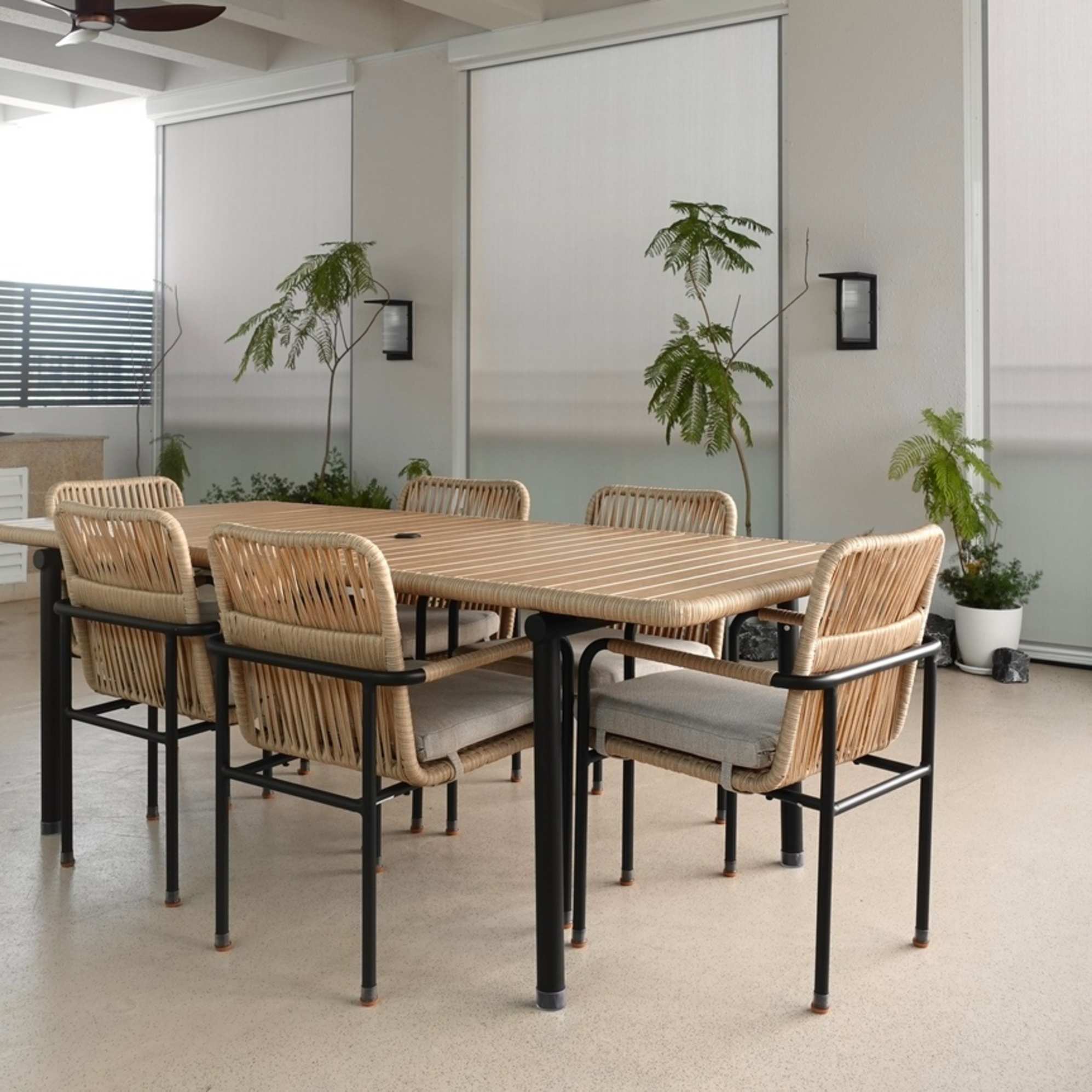
How to clean metal garden furniture
The appeal of metal frames, be it aluminium, wrought iron, or steel, is that they promise low maintenance. But low maintenance doesn’t mean no maintenance. Dirt has a way of quietly staging a takeover, and rust has a nasty habit of showing up uninvited.
When cleaning garden furniture with metal frames, you’ll need:
Mild soap or an all-purpose cleaner
A soft sponge or cloth
A wire brush or sandpaper for rust
Step-by-step maintenance for metal garden furniture:
Wipe everything down and dry it off immediately. Moisture sitting on metal is a recipe for disaster.
(Optional) Removing rust on metal furniture takes a bit of elbow grease, but a wire brush or a piece of sandpaper should clear the surface. Rust-resistant primer and paint applied afterwards will make sure it doesn't get any ideas about coming back.
But if you’re dealing with aluminium, it is the sensitive soul of the metal family and requires a gentler touch. For the love of your garden, put away the abrasive cleaners before you do something we’ll all regret. Stick to mild dish soap and water.
If you want to go the extra mile, a thin coat of car wax is our favourite secret weapon for shielding the finish from the outside world.
The Sierra Garden Lounge Chair
Picture credits: @stevecordony
The Sierra Garden Lounge Chair
Picture credits: @stevecordony

The Rio Aluminium Outdoor Dining Table Set
Picture credits: @my_friend_jackies_house
The Rio Aluminium Outdoor Dining Table Set
Picture credits: @my_friend_jackies_house

How to clean resin garden furniture
Resin furniture is for those who want the look without the upkeep. Whether it’s mimicking wood, wicker, or something more contemporary, it’s built to handle the outdoors without asking for much in return.
When cleaning resin furniture, here’s what you’ll need:
Soft brush or sponge
Cloth
Mild soap
White vinegar
Step-by-step maintenance for resin garden furniture:
A mixture of mild soap and water is usually all it takes. Use a sponge to scrub the surfaces with just enough pressure to lift the grime.
(Optional) For mould and mildew removal, mix equal parts of water and white vinegar to clear fungal growth.
The Sorrento Garden Sofa Set
Picture credits: @wheregraceresides
The Sorrento Garden Sofa Set
Picture credits: @wheregraceresides

The Guin Round Side Table
Picture credits: @abigail_erb
The Guin Round Side Table
Picture credits: @abigail_erb

How to clean outdoor garden fabric and upholstery
Nobody falls in love with a garden furniture set only because of the frame. It's the cushions that close the deal. They’re also where spills, dust, and weather quietly accumulate.
To keep your outdoor upholstery from showing its age, you’ll need:
Mild detergent
White vinegar or hydrogen peroxide (for the stubborn spots)
Soft brush
Microfibre cloth.
Fabric protector (for weatherproofing)
Step-by-step maintenance for outdoor fabric and upholstery:
When spills happen, the goal is to blot, not rub. Scrubbing only means you’re pushing the mess deeper into the fibres. Use a mild detergent and water for a more targeted approach.
(Optional) For the spots where mildew has settled in, a mix of equal parts water and white vinegar or hydrogen peroxide usually does the trick. Let the solution sit before using a soft brush to gently scrub the area.
If you’re serious about weatherproofing, a fabric protector or waterproofing spray is a small investment that keeps your upholstery from succumbing to the reality of living outside.
Recommended read: How to Clean Dirty Outdoor Cushions
Smart habits that make garden furniture cleaning easier
The best way to clean garden furniture is not to let it get that dirty in the first place.
Use protective covers: A well-fitted cover shields your furniture from weather and debris. Think of it as insurance for your setup.
Inspect regularly: Small issues grow quietly. A loose screw or early rust spot is easy to fix now and expensive to ignore later.
Keep furniture off the ground: Especially for wood, direct contact with damp surfaces shortens its lifespan. Furniture pads or risers create just enough distance to matter.
Store during harsh weather: Storms and extreme conditions aren’t a durability test. Move your furniture indoors or use heavy-duty covers when the forecast turns.
The payoff: less cleaning, more living
A well-maintained patio doesn’t happen by accident. It’s the result of small, consistent care that keeps everything looking and feeling intentional.
When you know how to clean garden furniture properly, you spend less time scrubbing and more time enjoying the space you’ve built. The kind of space that invites you out for a quick coffee and somehow keeps you there until sunset.
Because garden furniture shouldn’t feel like a project, it should feel like a place you want to return to.

Frequently asked questions about cleaning garden furniture
How to clean teak garden furniture?
Teak cleans like any other wood garden furniture, so no surprises there. The one step worth adding is teak oil after the cleaning. It keeps the wood looking like it belongs in your space rather than like it's been left to fend for itself.
How often do I need to clean garden furniture?
Twice a year is a good baseline to go by. Plan to do a thorough cleaning at the start of the season to get it ready, and again at the end to see it out properly. In between, a quick spot clean whenever something needs attention will do wonders.
Can I use bleach to clean patio furniture?
Bleach is essentially a nuclear option. Even if your plastic furniture can take the hit, harsh chemicals eventually eat away at the finish. Stick to soap and water. It gets the job done without the risk of turning a Sunday afternoon chore into a science experiment.
