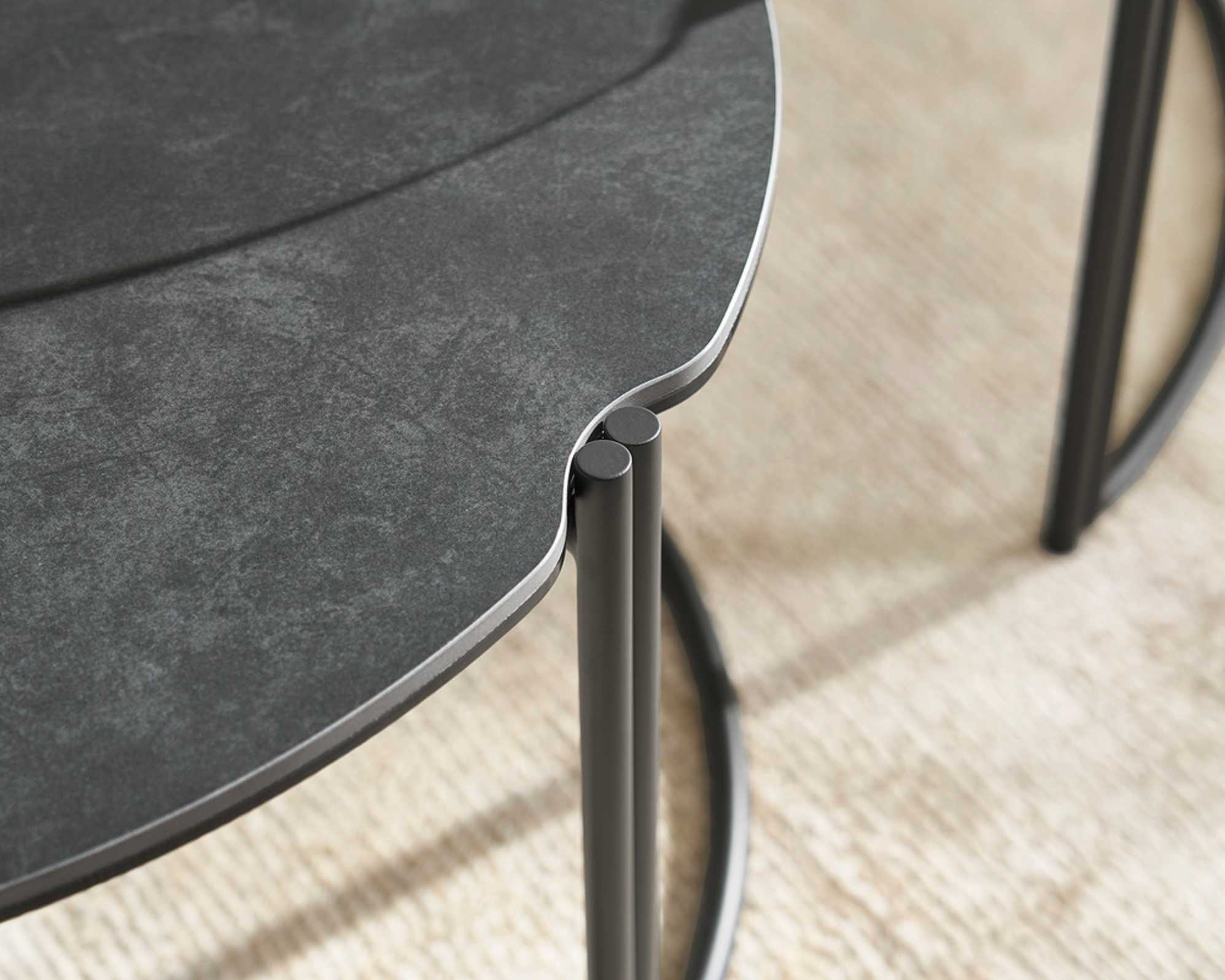
What is Sintered Stone?
Not every surface is built the same way. Some are coated, some are layered, and some rely on additives to hold everything together. Sintered stone is different.
When you ask what sintered stone is, you’re really asking how a material can feel this solid, this stable, and this resistant to everyday wear. The answer lies in how it’s formed—not just how it looks.
What is sintered stone?
Sintered stone is a high-performance surface material created by compressing natural minerals (like quartz or silica) under extreme heat and pressure until they fuse into a dense, ultra-compact slab.
It’s engineered to mimic the strength of natural stone while offering enhanced durability and consistency. In practical terms, it’s a surface designed to handle real life—spills, hot pans, and days when you forget to use the coaster.
In other words, sintered stone is:
An engineered material made from natural minerals
Formed using extreme heat and pressure
No resins or polymer binders
Highly dense and non-porous
Extremely resistant to heat, stains, and UV exposure
What is sintered stone made of?
If you’re wondering what sintered stone is made of, the answer is surprisingly simple: Natural raw materials.
| Component | Purpose |
|---|---|
| Quartz minerals | Provide hardness and structural strength |
| Feldspar | Supports durability and stability |
| Silica | Contributes to surface density |
| Natural pigments | Creates color and pattern variations |
These materials are refined, compressed, and sintered, meaning they are exposed to intense heat and pressure without melting into liquid form. Instead, the particles bond at a molecular level.
The result is a surface that feels solid because it is solid. Not coated, not layered, not pretending to be stone—but transformed into something structurally unified.
Is sintered stone the same as marble, quartz, and granite?
No, sintered stone is not the same as marble, quartz, or granite. They may live in the same design conversations, but they are fundamentally different materials with different origins and compositions.
Here’s how they compare:
| Material | Type | Composition | Porosity | Heat resistance | Maintenance |
|---|---|---|---|---|---|
| Sintered stone | Engineered | Natural minerals fused with extreme heat and pressure (no resins) | Non-porous | Very high | Low |
| Marble | Natural stone | Metamorphic rock formed over time | Porous | Moderate | High (requires sealing) |
| Granite | Natural stone | Igneous rock formed from cooled magma | Slightly porous | High | Moderate (requires sealing) |
| Quartz (Engineered quartz) | Engineered surface | Crushed quartz bound with resins | Non-porous | Moderate (resin limits heat tolerance) | Low |
How is sintered stone made?
The production process is what sets sintered stone apart.
Raw minerals are selected and purified
They are compressed under high pressure
The material is fired at extremely high temperatures
The particles fuse into a dense slab without resins or binders
This process is inspired by natural geological formation, except it happens in controlled conditions and over hours, not millennia. We often think of it as accelerating nature’s timeline without compromising its integrity.
Where is sintered stone commonly used?
Because of its strength and low porosity, sintered stone is often used in:
| Application | Why it works |
|---|---|
| Dining tables | Heat and stain resistance |
| Kitchen countertops | Durability under daily use |
| Outdoor furniture table tops | UV and weather resistance |
| Bathroom surfaces | Moisture resilience |
Is sintered stone easy to maintain?
Yes. It doesn’t ask for sealing. It doesn’t depend on protective coatings. Day-to-day care is straightforward:
Mild soap
Water
A soft cloth
Because it is non-porous, spills stay on the surface instead of sinking in. That means fewer worries about stains and less time managing the material—which is exactly how a modern surface should behave.
Why sintered stone belongs in real spaces
Sintered stone isn’t designed to be delicate. It’s designed to live with you. In kitchens, dining rooms, and outdoor spaces where surfaces work as hard as the people using them, sintered stone holds its ground quietly and consistently.