
Best Sofa Material to Tackle Singapore’s Humid Weather
Between 85% humidity, tropical downpours, air-con condensation, and the struggle of sweaty skin, your home is quietly fighting a war against Singapore’s climate. Every. Single. Day.
Choosing the right sofa material is your living room’s best defense on the front lines. It could be the difference between a sofa that ages into something beautiful and one that starts growing mould (yikes!) in places you’d rather not think about.
Every sofa material, ranked for the life you actually live
So: leather or fabric? Microfibre or bouclé? Maybe even rattan? Let’s break down the sofa fabric types designed for everyday life and everyday mess.
| Sofa material | Humidity resistance | Breathability | Durability | Best for |
|---|---|---|---|---|
| Cotton | 2/5 | 5/5 | 3/5 | Low-traffic rooms, natural aesthetics |
| Polyester | 4/5 | 3/5 | 4/5 | Budget-conscious, busy households |
| Velvet | 2/5 | 2/5 | 3/5 | Low-traffic, air-conditioned spaces |
| Performance fabric | 5/5 | 4/5 | 5/5 | Families, high-traffic living |
| Microfibre | 4/5 | 3/5 | 4/5 | Kids or pets |
| Leather | 4/5 | 3/5 | 5/5 | Minimalist, low-maintenance homeowners |
| Rattan/wicker | 5/5 | 5/5 | 3/5 | Outdoor spaces, tropical-style interiors |
Numbers tell part of the story. The rest is in the details—how each material actually feels underfoot, holds up over time, and fits the specific way your household operates. Here's what you need to know about each one.
1. Fabric sofas
Cotton
Pros: Timeless, breathable, and easy to live with. Cotton’s natural fibres give your sofa a soft, casual feel, and it comes in a wide variety of weaves, patterns, and colours. It’s a great choice for anyone who loves a natural, homey aesthetic.
Cons: Cotton can stain more easily than synthetic blends, and it may fade if exposed to strong sunlight.
Polyester
Pros: The unsung hero of sofa fabrics. Modern polyester is soft, resistant to stains, and remarkably durable, making it perfect for households that live hard on furniture. It’s also colourfast, which means your sofa won’t fade into a sad version of itself after just a few months in the sun.
Cons: Polyester isn’t as breathable as natural fibres like cotton or linen, so it can feel a little warm during long lounging sessions.
The Dawson Extended Sofa Set
Picture credits: @hamiltonhaven5
The Dawson Extended Sofa Set
Picture credits: @hamiltonhaven5
The Jonathan Sofa
Picture credits: @twopotatoesinasack
The Jonathan Sofa
Picture credits: @twopotatoesinasack
Velvet
Pros: Rich, plush, screams indulgence. Irresistibly soft under your fingertips and catches the light in the most beautiful way, adding depth and drama to any room. Great for adding a high-end, glamorous feel to the room.
Cons: Can attract pet hair, dust, and stains. Some modern velvet blends now offer stain-resistant finishes, but it’s still not as “bulletproof” as performance fabrics.
Performance fabric
Pros: Performance fabrics are made from advanced synthetic fibres or blends specifically crafted to resist stains and repel liquids. Think of it as your modular sofa’s invisible superhero cape. Accidental wine splash? Easy clean up. Weeks of endless rain with the windows closed? Piece of cake.
But not all performance fabrics look or feel the same. Here are our top choices:
| Fabric | What it's like | The upside | The caveat |
|---|---|---|---|
| Bouclé | Effortlessly stylish, warm, and textured—the kind of fabric that looks good without trying and gets better with time | Hides dust and minor wear beautifully. Brings a lived-in luxury that few fabrics can match | Those charming loops can snag—pets and kids will test their patience |
| Twill | Tight-weave, no-fuss, and quietly hardworking | Exceptionally durable and naturally camouflages pet hair and daily wear | Not the most breathable. Worth considering before committing to marathon sofa sessions in a warm room |
| Polyester-cotton and polyester-linen | Looks and feels closer to natural fabric than most synthetic materials | Performs significantly better than pure cotton or linen in humidity, with a more organic aesthetic | Not as robust as dedicated performance fabrics—a solid middle ground, not a top-tier substitute |
| Outdoor fabric | Polypropylene-based and built for punishment | Some of the strongest performance fabrics available. Handles everything a busy household throws at it, and then some | Can lean slightly more utilitarian in appearance—function-first, aesthetic second |
Cons: The compromises are mostly felt rather than seen. Breathability isn't performance fabric's strong suit — natural fibres still win that contest, and you'll know it on a warm evening in a room that's forgotten how to ventilate. Some blends also arrive on the stiffer side and need a proper breaking-in period, and a few lower-quality options skip the "comfortable" part of "comfortably practical" altogether. Worth knowing before you commit.
The Fable Performance Fabric Sofa
Picture credits: @courtneyycahoon
The Fable Performance Fabric Sofa
Picture credits: @courtneyycahoon

The Mori Performance Fabric Armless Sofa
Picture credits: @mensweardog
The Mori Performance Fabric Armless Sofa
Picture credits: @mensweardog

2. Microfibre sofas
Pros: Tight weave made from ultra-fine synthetic fibres (typically polyester) creates a strong moisture-wicking effect that pulls dampness away from the surface and dries quickly. Reassuringly soft, surprisingly durable, and easy to wipe down, AKA a favourite for households with young children, pets, or spill-prone family members.
Cons: Doesn’t breathe as freely as natural fabrics. The fix? Some perfectly placed fans, decent airflow, or a cool gust of air-conditioning.
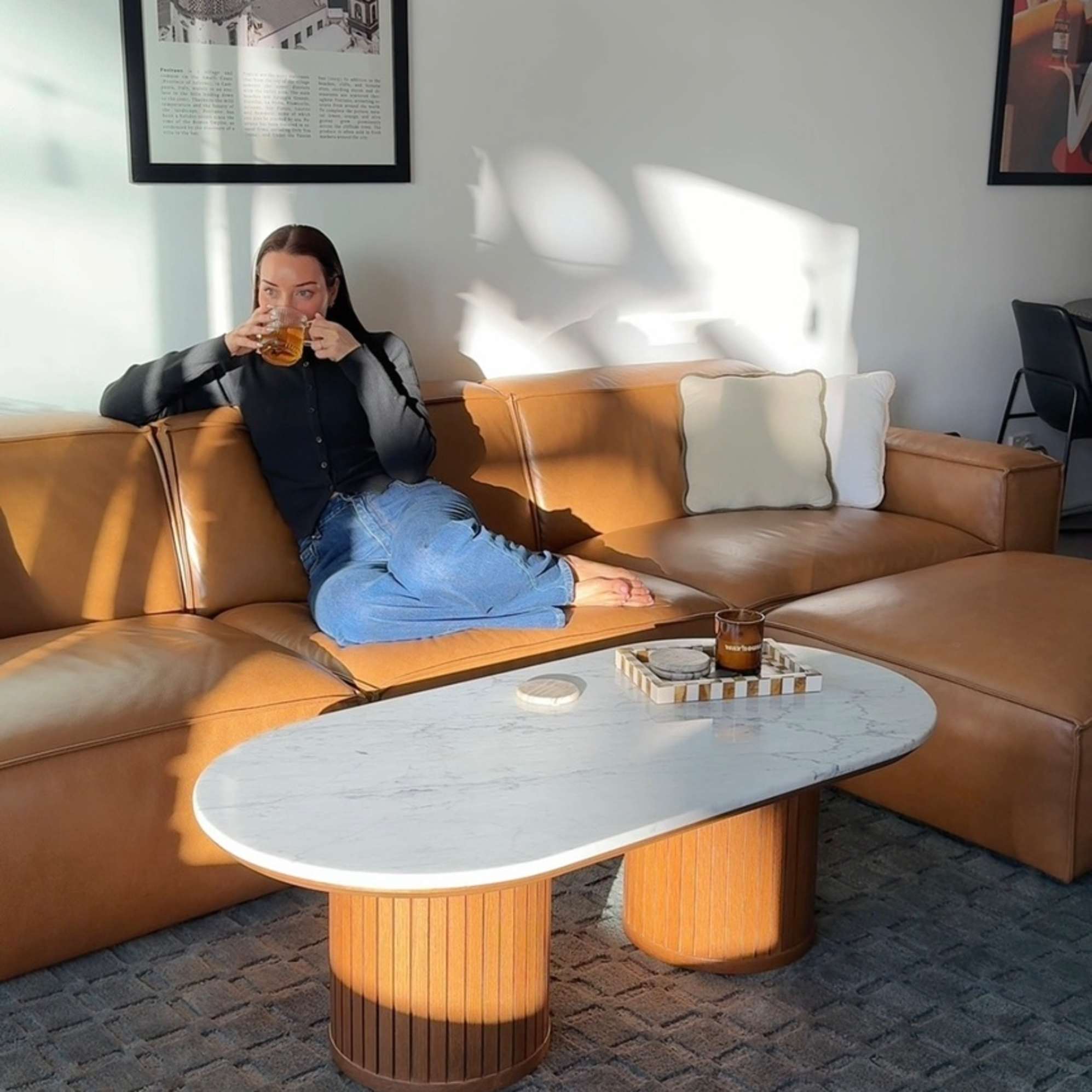
3. Leather: The timeless classic with personality
Pros: Leather sofas are incredibly durable, easy to wipe clean, and if made from top-grain leather, only get better with age as they develop a rich, memory-hued patina. And unlike fabric, leather doesn’t hold onto smells or stains, which is a gift if your living room hosts dogs, post-gym humans, or saucy snacks.
Cons: Not the perfect sofa material match for everyone. Pets with claws can leave marks. Young artists with crayons can cause heartbreak. And leather appreciates proper care, the same way a premium bag or pair of boots does. If you’re willing to maintain it, you’ll be rewarded with decades of style and comfort.

4. Rattan or wicker sofas
Pros: Practically designed for Singapore’s tropical climate, rattan barely breaks a sweat compared to the rest. Its open, woven structure lets air move through it freely and with no upholstery fibres to trap moisture, there’s zero mould risk if you keep it clean. Lightweight, easy to move, and great for a resort aesthetic or outdoor spaces.
Cons: Doesn’t offer the plush, sink-in comfort of an upholstered sofa. The fix? Pair it with breathable outdoor-grade or performance fabric cushions and you get the best of both worlds: natural breathability with a comfortable surface to actually sit on.
The best sofa material in Singapore?
Honesty, there’s no single right answer. But the best answer for you is simply the sofa that fits your life. Performance fabrics, microfibre, leather, velvet, cotton, polyester and rattan each has its strengths.
Pick a material that lets you spill, snuggle, and relax without a second thought. Nail the care routine, keep the dehumidifier running, and your sofa’s ready to survive real life—and let you enjoy it too.

Frequently asked questions about the best sofa fabric materials in Singapore
What is the best sofa material for Singapore's humidity?
Performance fabrics are the gold standard sofa material for Singapore’s climate. Engineered to resist moisture, stains, and microbial growth, they handle humidity without sacrificing the look or feel of a premium sofa.
Leather or fabric sofa: which is better for a Singapore home?
The deciding factor is your lifestyle. Leather is easier to wipe clean, doesn’t absorb odours, and resists moisture damage from humid air: great for a low-maintenance, long-lasting investment. Fabric sofas, specifically performance fabrics, offer more breathability and softness, which can make a real difference in comfort during long lounging sessions in the heat.
How do I prevent my sofa from getting mouldy in Singapore?
Three things make the biggest difference in combating mould:
Vacuum and air out cushion covers regularly.
Keep indoor humidity below 60% with a dehumidifier, especially in rooms where the sofa sits near windows or gets limited airflow.
Clean spills immediately rather than letting moisture sit in the fabric.
If you already have a fabric sofa that isn’t performance-rated, a protector spray adds a helpful moisture barrier. And if you’re buying new, choosing a performance fabric, microfibre, or leather sofa material from the outset removes most of this anxiety entirely.
