
Design Dilemmas Solved: Awkward Living Rooms
We don’t talk enough about awkward living room layout ideas, even though most of us are quietly dealing with one. The kind of room that looked “full of character” on the listing, then revealed its quirks the moment you tried placing a sofa.
Here’s the truth: a room that works isn’t about how much you spend. It’s about how intentionally you place what you already have. Because furniture isn’t just décor; It’s choreography. And right now, your living room might be missing a few steps.
If you’re navigating weird living room layouts, this is where we fix it. From long and narrow spaces to columns that appear for no reason, we’ll show you how to make every layout feel considered, not compromised.
1. Long and narrow living rooms
Long and narrow living rooms have one job: pulling your eye straight through it. The problem is, it rarely gives your eye a reason to stop. So everything lines up against the walls, and suddenly your living room feels like a corridor with seating.
So, what's the best layout idea for this type of room? The fix starts with unlearning that instinct: stop treating the walls like they're load-bearing to your layout. Here's where to start:
Angle your couch to break sight lines: Even a slight diagonal shift away from the walls can break the tunnel effect and trick the eye into reading the room as wider.
Zone across the width, not along: Create two distinct seating zones across the room instead of running furniture lengthwise. A rug in each zone anchors the furniture and signals where one area ends, and the next begins.
Use modular pieces as quiet dividers: A modular sofa is reconfigurable and large enough to naturally divide the room without feeling like a barricade. Plus, it makes adding extra seating effortless.
The Fable Performance Fabric Side Chaise Sofa
Picture credits: @modernly_you
The Fable Performance Fabric Side Chaise Sofa
Picture credits: @modernly_you
2. Open plan spaces
Open plan living rooms come with a strange paradox: you finally have all that glorious square footage, and yet nothing feels settled. Without walls to push furniture against or corners to hide things in, the room can end up feeling shapeless and weirdly hard to actually live in.
The perfect layout ideas for these unconventional living rooms are about intentional division:
Design in zones: A cozy reading nook tucked into an odd corner, kept separate from your main conversation area or TV viewing space, makes the room feel purposeful rather than just large.
Give each zone its own identity: Its own rug, its own furniture grouping, its own purpose. That's what makes the division feel deliberate instead of accidental.
Use seating to define boundaries: A sofa with a chaise or an L-shape subtly marks where one zone ends, and another begins. This marks the boundary between zones that makes open-plan living feel airy in the first place.
3. Awkward living rooms with angled walls
An awkward-shaped living room with angled walls has broken a lot of people. You try to push everything flush against the wall, and suddenly nothing lines up, nothing feels right, and you’re left with dead space you can’t ignore.
Instead, work with the angles, not against them. Here's how to turn every awkward degree into something that actually works:
Align with the angle, don’t fight: Orient your seating to follow or mirror the wall's direction rather than fight it.
Turn awkward corners into purpose: That strange slanted space that seemed like wasted real estate might just be the perfect spot for a floor lamp and a side table.
Anchor with a rug: A large, centered rug gives the eye something stable to return to, making the angles feel intentional rather than accidental.
4. Spaces with columns
The reason why spaces with columns can be difficult to work with is that columns don’t just interrupt your layout; they interrupt the movement. And when the flow breaks, the whole room feels harder to live in.
The solution is to map out how people actually move through the space before you place your furniture. Then arrange everything to keep those routes clear, and be sure to:
Make the columns anchors: A sofa facing a column with a side table beside it creates the sense of a deliberate nook rather than a blocked corner.
Keep the front clear: Placing anything large directly in front of a column compounds the blockage instead of solving it.
Use lighting to reframe the columns: A floor lamp or sconce positioned beside a column draws the eye to it intentionally, making it feel like a design choice rather than an obstacle you just learned to live with.
5. Sloped or lofted ceilings
This is one of those living room layouts that genuinely rewards leaning into its weirdness. However, a sloped ceiling can either be your biggest limitation or your strongest feature.
Instead of letting those angles bully your floor plan, use them to dictate where the "chill zones" go and where the "high-traffic" zones flow.
To maximize the height and drama your ceiling gives you, you should also:
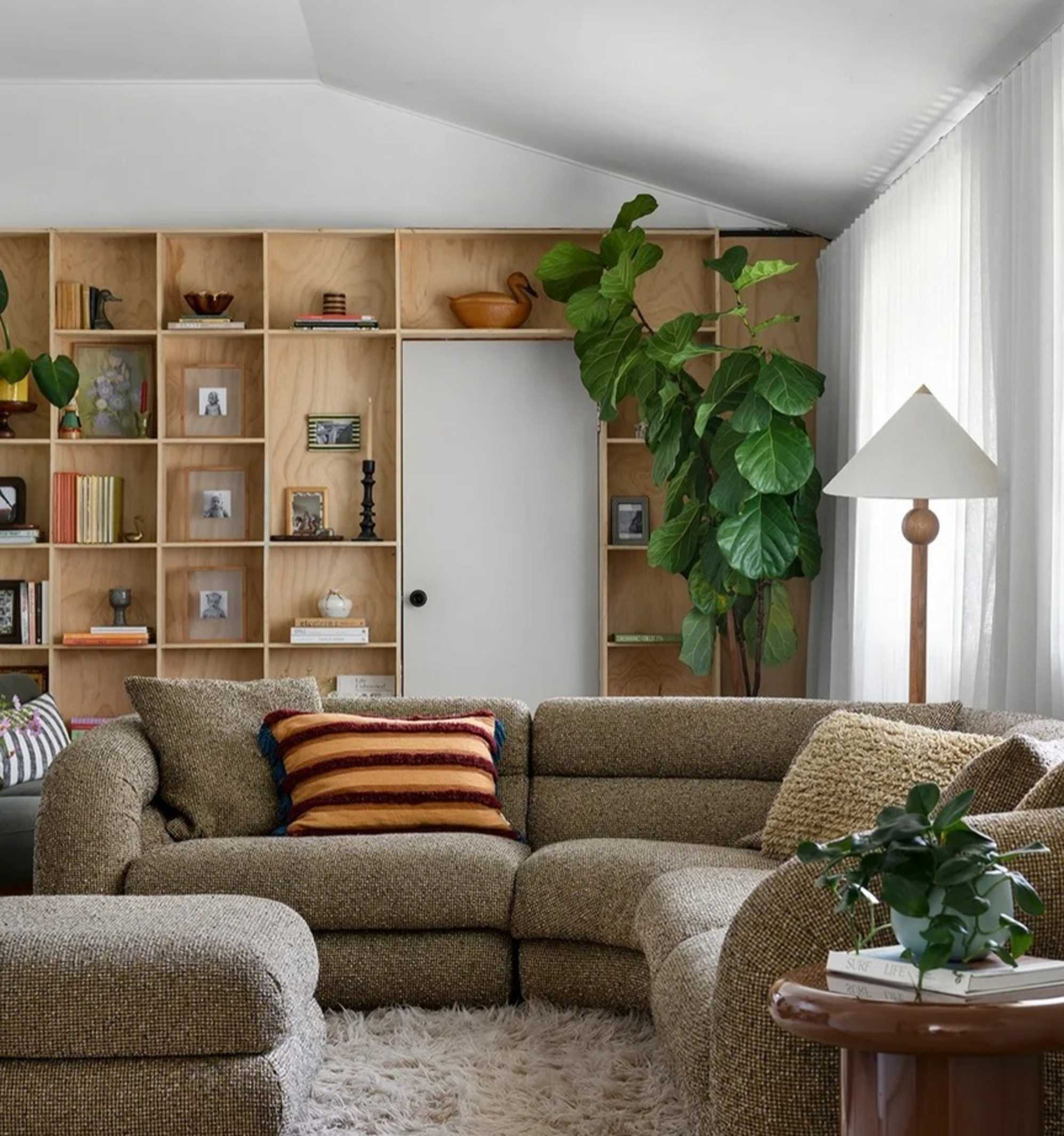
Seat toward the peak: Place your main seating toward the area with the most ceiling height.
Let low sections go light: Only place low bookshelves, storage, and other shorter pieces in the lower areas.
Go vertical on the highest wall: Tall artwork or vertical shelving draws the eye upward, turning the slope into a feature rather than a flaw, so consider a gallery wall, a tall bookcase, or even a statement light fixture that makes the most of every inch above you.
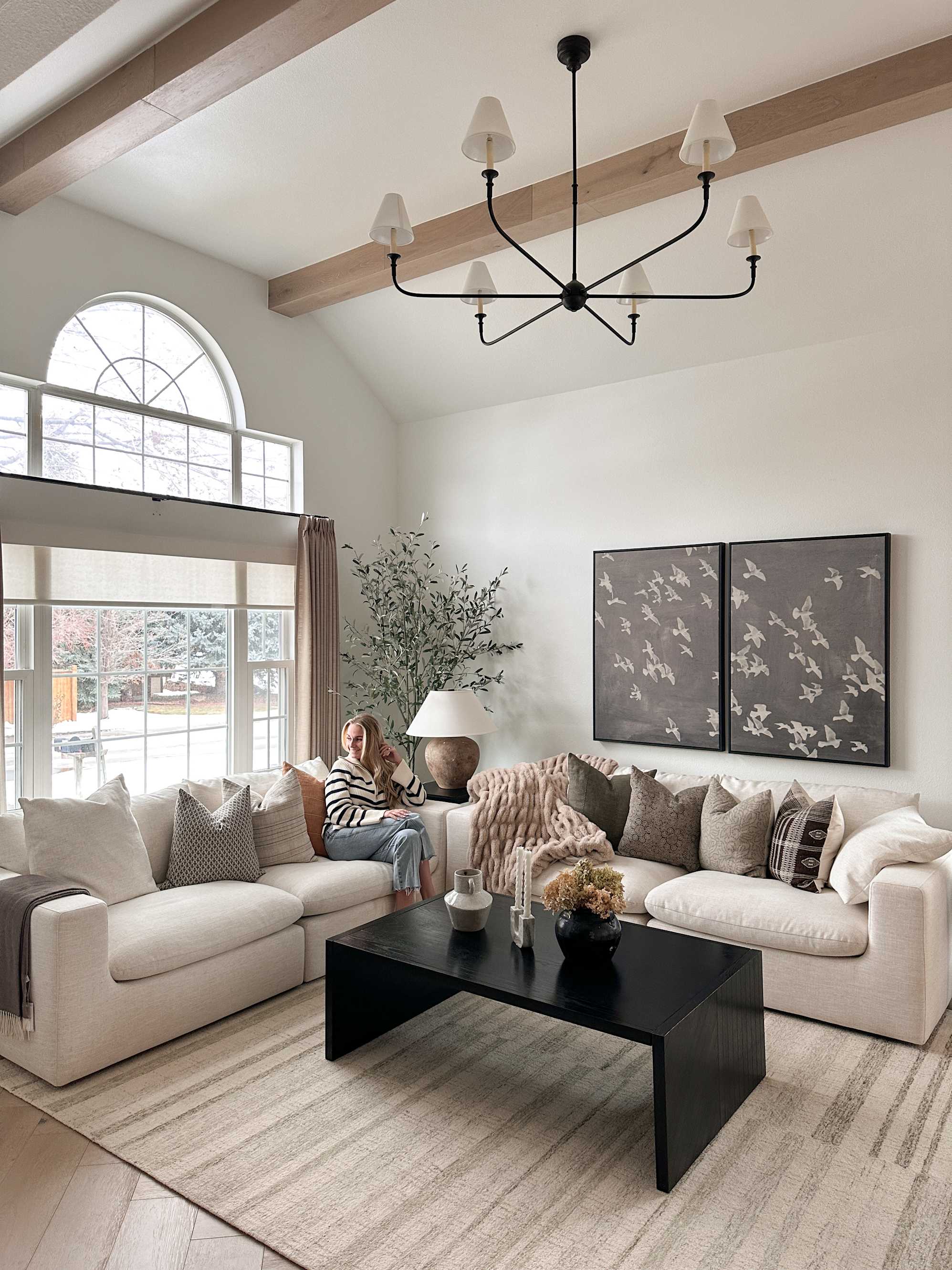
The Solari Performance L-Shaped Sectional Sofa Set
Picture credits: @hannahbeaden
The Solari Performance L-Shaped Sectional Sofa Set
Picture credits: @hannahbeaden
6. Fireplace and TV walls
The "Fireplace vs. TV" showdown is a classic design standoff that’s caused more neck strain than a front-row seat at the cinema. It’s one of the most common living room design frustrations, but it's fixable once you stop treating them like rival siblings competing for your affection.
Instead of being forced to choose a favorite, the trick is to:
Go diagonal: Angle your seating at roughly 45 degrees so it faces the midpoint between both focal points rather than committing to either one. Just make sure your couch lands within the recommended viewing distance.
Add a swivel chair: It gives everyone the flexibility to orient toward whichever focal point is in use without rearranging the whole room.
Find the middle ground: Knowing how to arrange furniture in an awkward living room with two competing focal points comes down to that diagonal sweet spot. Give neither wall the cold shoulder, and the layout stops feeling like a compromise.
Every awkward room has a way out
There's no such thing as an unfixable living room, only one that hasn’t been solved yet.
Whether you’re wrestling with a floor plan that’s basically a glorified hallway or playing "dodge the pillar" with structural columns, the right furniture is the ultimate peace treaty. Because the moment your furniture starts working with the room instead of against it, everything shifts. The flow improves. The space settles. And suddenly, that “awkward” living room starts feeling like it was designed that way all along.

What is the 3-5-7 rule in interior design?
The 3-5-7 rule is used for decorating. It suggests grouping decorative objects in odd numbers because odd groupings create a natural asymmetry that guides the eye more intuitively than even ones. It applies to shelves, mantels, coffee tables, and gallery walls, and scales across object sizes too.
If you're dealing with a weird living room layout, this rule is especially useful for anchoring awkward corners or uneven wall spans, as the odd-number clusters help create visual balance when the space itself doesn't offer it.
What is the 2/3 couch rule?
The 2/3 couch rule suggests that related furniture should measure roughly two-thirds the length of the couch. This magic ratio keeps things balanced and functional without the room feeling cramped, and it's particularly handy for awkward-shaped living rooms, where proportions can easily feel off if furniture is chosen by eye alone.
What is the biggest mistake in the placement of furniture?
The biggest mistake when placing furniture is pushing everything against the walls. This idea may seem logical, like you're creating space, but what it actually creates is a room that feels flat and weirdly formal. This is especially true in a long, awkward living room layout, where lining furniture along the longest walls only stretches the space further and makes it harder to use.
Instead, try pulling pieces away from the walls, grouping them around a focal point, and leaving clear paths for people to actually move through the room.
